CategoriesNon classé

Why Milonga del Rio de la Plata ?

Tango and the Río de la Plata

The Río de la Plata is an estuary on the South Atlantic coast, stretching 230 km from La Plata (Argentina) to Punta del Este (Uruguay). It is formed by the Paraná and Uruguay rivers. Along its banks, ports like Rosario, Buenos Aires, and Montevideo have long been centers of trade and cultural exchange.

The word tango has always been surrounded by debate. What we do know is that it was first used to describe “meeting places” in Africa and colonial America. By 1790, in Buenos Aires, tango referred to the gatherings and dances of African slaves. In Montevideo, the same meaning appeared at the start of the 19th century.

Cuban ships often stayed in these ports for months to load salted meat, and their sailors brought music such as the habanera—another influence that shaped local rhythms.

Later, between 1880 and 1920, more than six million Europeans arrived through these same ports. Their presence, combined with African traditions and local culture, gave birth to tango—first in Buenos Aires, and soon after in Montevideo and Rosario.

Population changes also played a role: in 1880, Buenos Aires had around two million inhabitants, compared to one million in Montevideo. Today, Greater Buenos Aires counts about 15 million, while Montevideo has about 1.5 million. This shifted cultural and economic weight, but tango remained rooted in the shores of the Río de la Plata.

That’s why we believe tango should not be claimed by one country alone, but by the whole region of the Río de la Plata.

It is in this spirit that we named our Brussels milonga:
Milonga del Río de la Plata.

Text by Hugo Godoy (21/05/2012 * revision 09/2025)
CategoriesNon classé

What’s size or form of my tangoshoes will suit me ?

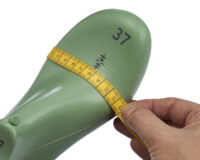
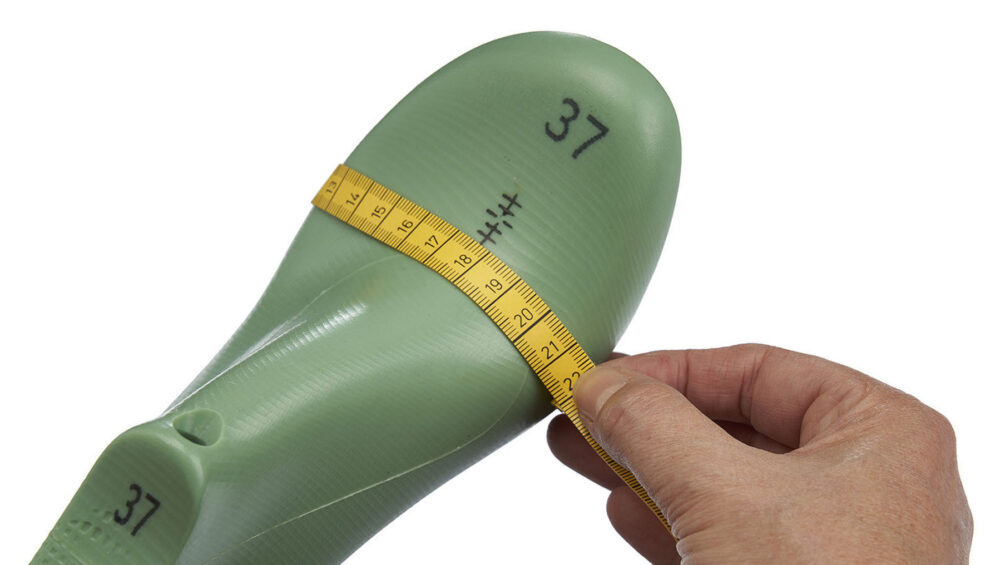
Here you can find the size chart of your Madame Pivot tango shoes with foot length and circumference by size.

*measured around the foot in its widest point

Half sizes

Half sizes are not available. We believe that the different choices of shapes are enough to cater all kinds of feet.

Standard shape S (formerly marked as 13)

It is the most common shape, with a comfortable sole fitting most foot types, particularly an egyptian-shaped foot, where the big toe is longer than the others.

Narrow shape N (formerly marked as 11)

The shoe sole is narrow and with a triangular shape and fits slim and thin feet. Particularly suitable to a greek-shaped foot, where the second toe is longer than the others. Same length as the standard shape, but with reduced volume.

Wide shape W (formerly marked as 15)

Suitable to particularly wide and square-shaped feet. The upper is mounted on the same sole as the standard but around a bigger last**, increasing the shoe volume.

Flat shape F

Recommended to those who have slim feet with a low bridge height, but not particularly narrow in width and with a rounded rather than a triangular shape. Although the shape of the sole is the same as the standard, shoes have a reduced volume in the upper for a snugger fit.

If you still have doubts about the correct shape of your foot, send us a photo of your foot. 

We are happy to help you!

CategoriesNon classé

About LA GARZONNE / EL GARZON

La Garzonne /El Garzon produced by DeTangosetrata are the house labels designed by Sandrina Dh. 

The workshops of DeTangosetrata are located in Brussels, in the heart of Belgium.

It is there, that all ideas are collected and projects hang form. 

DeTangosetrata carefully studies and designs each garment using only Italian high quality materials. 

The policy is based on local and fair production, in fact each piece is accurately created by local craftsmen.

Also the men collection of El Garzon. 

Each clothes is available in 3 different colors of which only 5 pieces will be made, making each garment limited and exclusive. 

You will look unique at the dance floor with La Garzonne/El Garzon !